



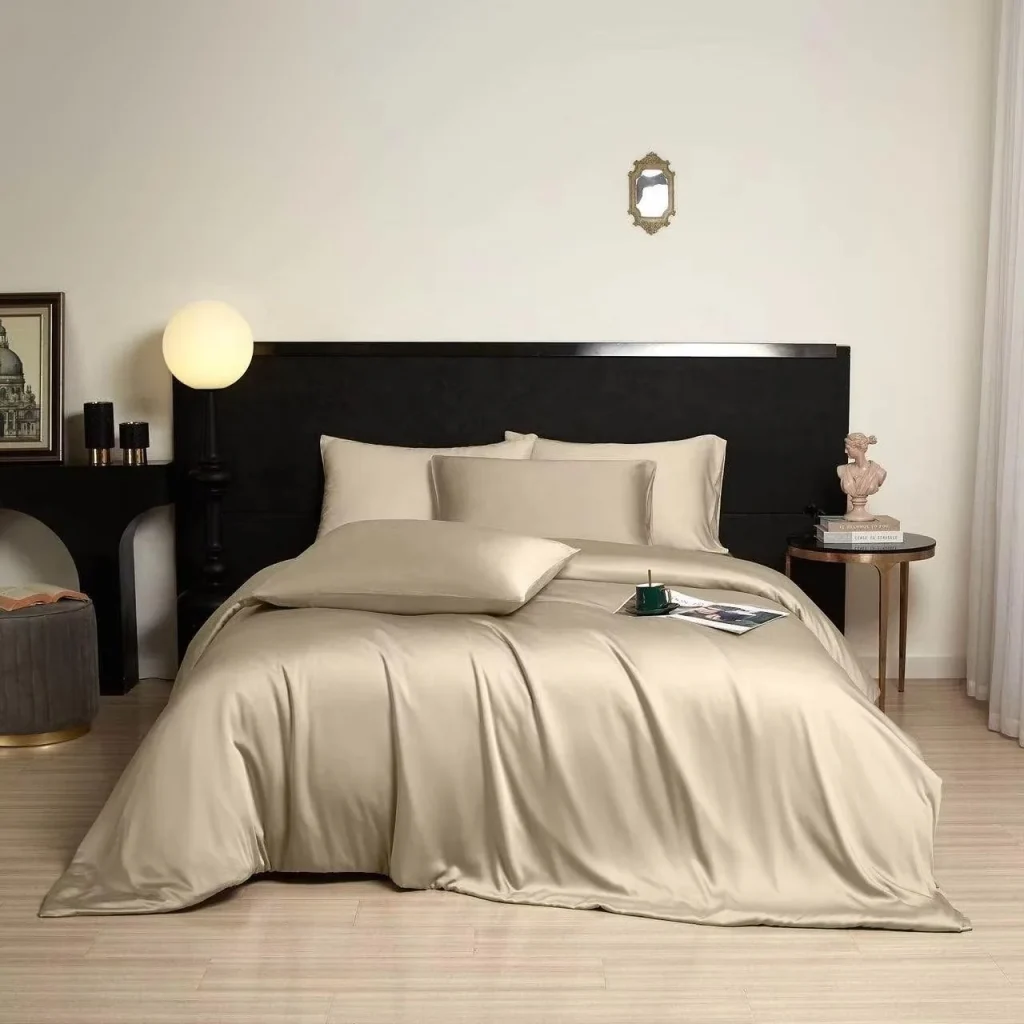
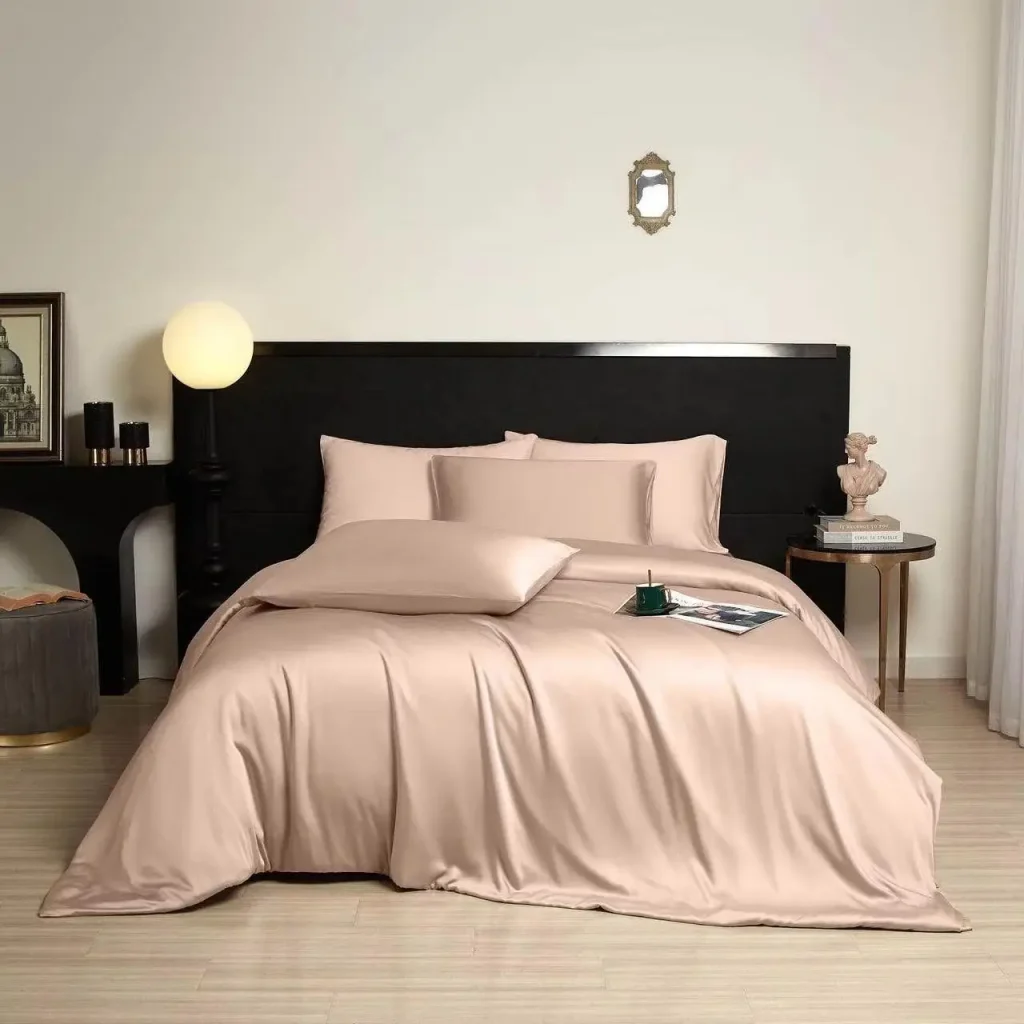
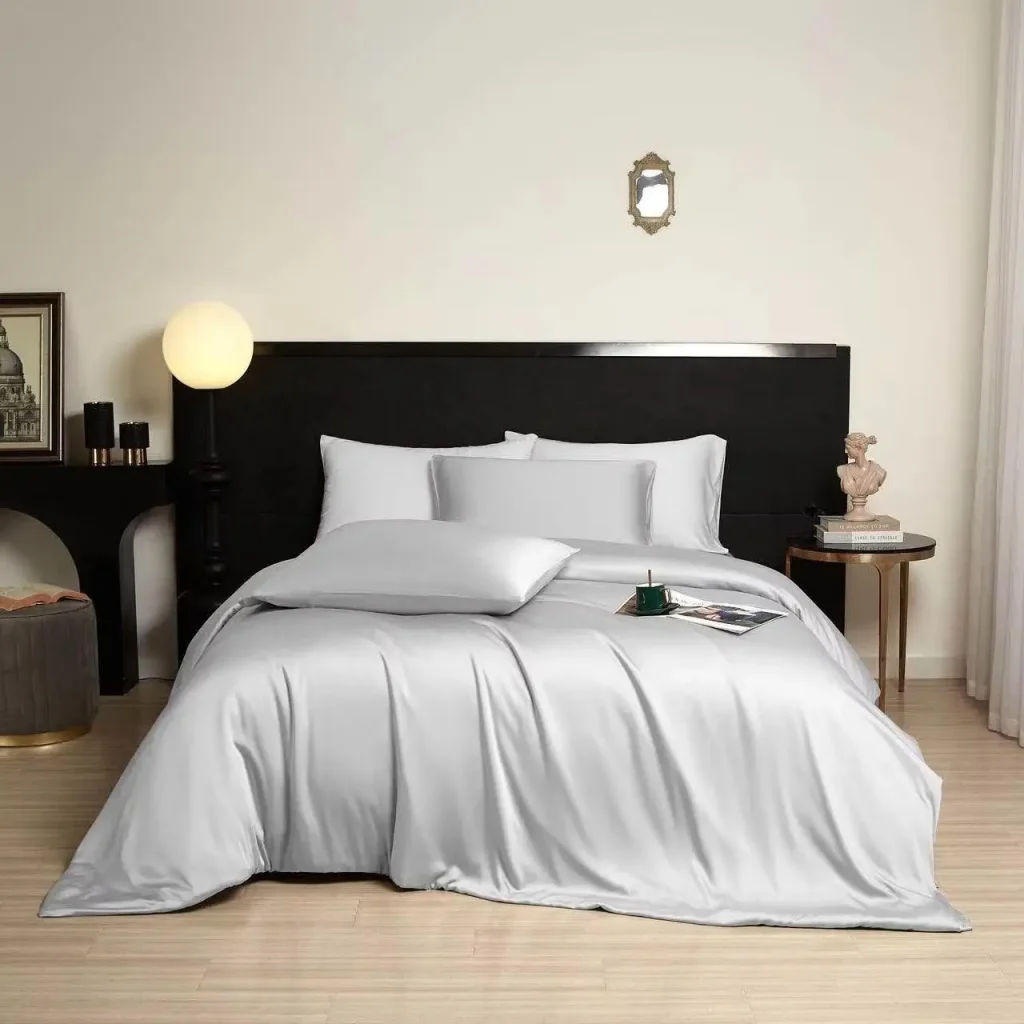
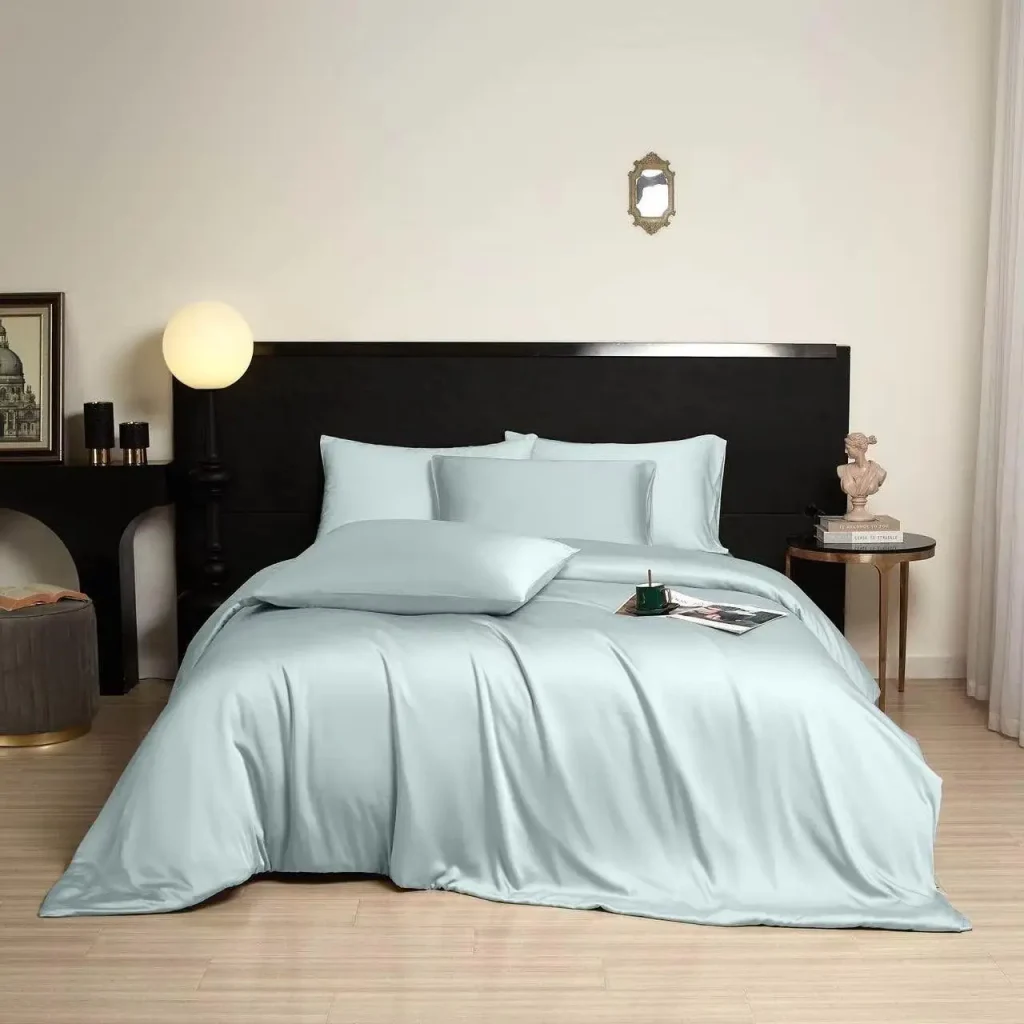
Bamboo fiber, as the name suggests, is a fiber extracted from bamboo. After processing and refining this fiber, it is made into the bedding we use.First, the characteristics of bamboo fiber beddingï¼1. Good hygroscopicity: Observed under a 2000X electron microscope, the cross-section of the bamboo fiber is deformed and filled with holes similar to ovals. It is highly hollow and has a strong capillary action that absorbs and evaporates water instantly.Among all natural fibers, bamboo fiber ranks first in terms of moisture absorption and moisture permeability.2. Antibacterial, antibacterial and bactericidal effects: Bamboo fiber products have natural antibacterial mite, deodorizing, and insect-proof functions.3. Anti-ultraviolet: Tested by the Shanghai Institute of Physics, Chinese Academy of Sciences, for 200~400nm ultraviolet rays, the permeability of cotton is 25%, the permeability of bamboo fiber is less than 0.6%, and its anti-ultraviolet ability is 41.7 times that of cotton.4. Green and environmental protection: The extensiveness and availability of resources are mainly reflected in the short growth period of bamboo, which can be completed within 2-3 years, and can be operated for a long time once planted. Bamboo can grow up to3 feet tall overnight, and it grows quickly. And renewable, it can replace cotton, wood and other resources for sustainable use.Second, the benefits of using bamboo fiberï¼Bamboo fiber has strong antibacterial and bactericidal effects, and any artificially added chemical substances cannot match its natural antibacterial effect. This natural antibacterial effect is not only natural, environmentally friendly, long-lasting and completely different from artificially processed antibacterial fibers. Its antibacterial effect has a certain spectral effect.Since bamboo fibers contain sodium copper chlorophyllin, they have a good deodorizing effect. Experiments have shown that the ammonia deodorization rate of bamboo fiber fabrics is 70% to 72%, and the deodorization rate of acid odor is 93% to 95%. In addition, sodium copper chlorophyllin is a safe and excellent UV absorber, so bamboo fiber fabrics have good UV protection effect.Third, bamboo fiber maintenance and washingï¼Maintenance: Before the first use, rinse once with clean water to clean the pulp outline and wash away floating colors, making the fabric extra soft and not easy to fade in the future.Washing method: keep washing at room temperature, do not soak at high temperature, dry clean, place in a ventilated place to dry, do not expose to sunlight, iron at low temperature, do not twist, the toughness of bamboo fiber after absorbing water will be reduced to 60-70% compared to before absorbing water , so it should not be pulled to reduce the service life.

Feature
*Fabric: Bamboo Fiber*Printing and dyeing process: Reactive printing and dyeing*Weaving process: yarn dyed*Customized processing: Yes, support for customized separate duvet cover/separate flat sheet/separate fitted sheet/separate pillowcase*Whether to support Drop shipping: Yes


Size Information
Washing care
*Machine Washable (Recommended Hand Wash)
*Hand WashCold / No Bleach / Hang Dry
Size Chart of This Design
Bed sheet Duvet cover Pillowcases Suitab QUEEN 245x270cm 200x230cm 48x74cm 1.5/1.8m KING 270x270cm 220x240cm 48x74cm 2/2.2m Set combination description 4 pcs 1bedsheet +1duvet cover+2pillowcases
The following dimensions are for reference only, please confirm with customer service staff carefully for specific customized dimensionsï¼

The following are customizable items, please consult customer service for details
Custom brand cloth bags, gift boxes, PVC three-dimensional packaging bags, etc.

| Supplier | Chengdu Molee Textile Co., Ltd. |
| Rating | 1.0 / 5 |
| Vendor name | Chengdu Molee Textile Co., Ltd. |